
June 02, 2026
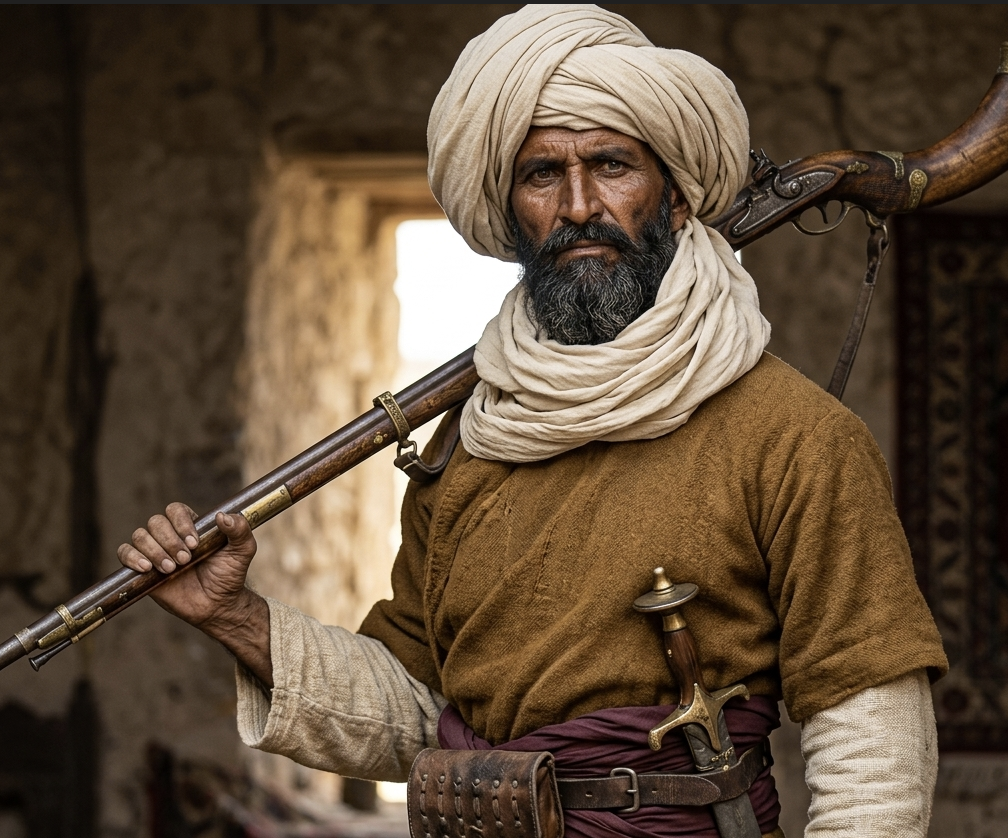
In the annals of South Asian history, certain figures emerge whose lives epitomize courage, resilience, and an unyielding spirit in the face of overwhelming odds. Sardar Painda Khan Tanoli, the formidable ruler of Amb State, is one such legendary warrior. His name resonates with a saga of fierce resistance, a 24-year war against the mighty Sikh Empire, and a legacy that continues to inspire. This post delves into the extraordinary life and struggles of a man who dared to challenge one of the most powerful empires of his time.
Born in 1801, Mir Painda Khan Tanoli inherited the chieftainship of Amb State, a strategically important territory nestled in the Hazara region, from his father, Nawab Khan, in 1818. The Tanoli people, known for their martial prowess and independent spirit, had long maintained their autonomy. Painda Khan, even in his youth, displayed the leadership qualities and warrior ethos that would define his reign. He was not merely a tribal chief; he was a leader destined to become a symbol of defiance.
The early 19th century witnessed the meteoric rise of the Sikh Empire under Maharaja Ranjit Singh, often hailed as the "Lion of Punjab." His ambitions knew no bounds, and his empire rapidly expanded, swallowing smaller, independent states. The fertile plains and strategic mountain passes of the Hazara region, including Amb, naturally drew the attention of the Sikh Empire. However, unlike many who submitted to the formidable Sikh forces, Painda Khan Tanoli chose a different path: one of staunch resistance.
The conflict was not just a political struggle; it was a clash of wills between a burgeoning empire and a determined warrior chieftain defending his ancestral lands and people. Painda Khan refused to pay tribute or acknowledge Sikh suzerainty, setting the stage for one of the most prolonged and arduous wars in regional history.
What makes Sardar Painda Khan Tanoli's story truly remarkable is the sheer duration and intensity of his resistance. For an astonishing 24 years, from approximately 1820 until his death in 1844, he waged a relentless war against the Sikh Empire. This was not a series of isolated skirmishes but a continuous, often brutal, struggle involving some of the Sikh Empire's most celebrated generals, including the legendary Hari Singh Nalwa.
Hari Singh Nalwa, renowned for his military genius and ferocity, was Maharaja Ranjit Singh's most trusted general and a key figure in the Sikh expansion. He led numerous campaigns into the Hazara region, often clashing directly with Painda Khan's forces. Yet, despite Nalwa's formidable reputation and the superior resources of the Sikh Empire, Painda Khan consistently proved to be an elusive and dangerous foe.
Painda Khan employed effective guerrilla tactics, utilizing the rugged mountainous terrain of Amb to his advantage. His intimate knowledge of the landscape, coupled with the unwavering loyalty of his Tanoli warriors and allied tribes, allowed him to launch surprise attacks, cut off supply lines, and retreat into inaccessible strongholds. He was a master of strategic withdrawals, regrouping his forces, and then striking back when least expected.
The war was marked by numerous sieges, battles, and periods where Painda Khan would lose control of forts and territories, only to reclaim them through sheer determination and strategic brilliance. One notable instance from February 1844 highlights his leadership, where he personally led an army of 10,000 men, demonstrating his continued military strength and the unwavering support he commanded. His ability to rally his people and rebuild his strength after setbacks became a hallmark of his resistance. He was not just a warrior but a "Warrior Ruler" and a "State Builder," constantly striving to maintain the independence and integrity of Amb.
Sardar Painda Khan Tanoli died in 1844, still fiercely resisting the Sikh Empire. His death did not signify a surrender but rather the end of an individual's monumental struggle. His fight had a profound impact, not only on the history of the Tanoli people but also on the wider regional dynamics. He became a symbol of courage, a beacon of defiance against imperial expansion, and a testament to the power of a determined leader defending his homeland.
His story is a vital chapter in the history of resistance in South Asia, showcasing how a relatively small state, under the leadership of an exceptional warrior, could hold an empire at bay for over two decades. Painda Khan's name continues to be revered as a national hero among the Tanolis and a legendary figure in the history of the Hazara region.
Sardar Painda Khan Tanoli stands tall as a testament to the indomitable human spirit. His 24-year war against the Sikh Empire, led by generals like Hari Singh Nalwa and overseen by Maharaja Ranjit Singh himself, is a saga of unwavering resolve. He was a warrior, a strategist, and a ruler who chose honor and independence over submission. His legacy is a powerful reminder that true strength lies not always in the size of an army, but in the courage of conviction and the will to resist tyranny. The name Painda Khan Tanoli will forever be synonymous with valor and an unyielding fight for freedom.

June 10, 2026


June 06, 2026
June 05, 2026