
June 05, 2026
In the annals of Pakistan's struggle for independence, few figures command as much respect and affection as Khan Jalaluddin Khan, affectionately known as "Jalal Baba." Hailing from the picturesque Hazara region, Jalal Baba earned the epithet "The Lion of Hazara" through his unwavering courage, astute political leadership, and profound dedication to the cause of a separate Muslim homeland. His life story is a testament to how an individual, rooted in humble beginnings, can rise to become a pivotal force in shaping a nation's destiny. This biography delves into the remarkable journey of Jalal Baba, from a blacksmith's son to a federal minister, whose legacy continues to inspire generations.
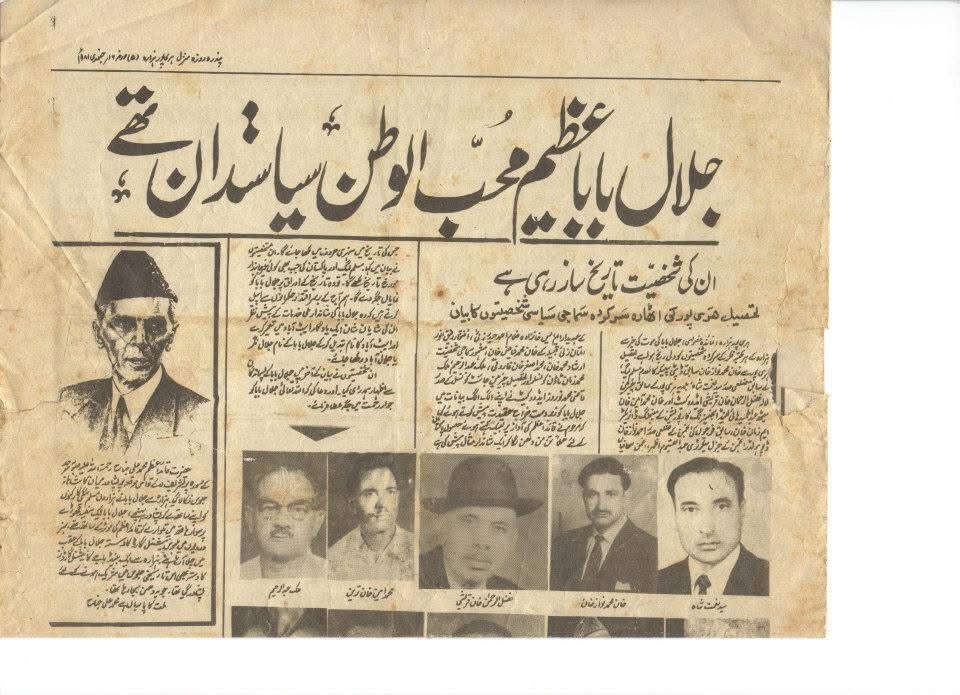
Khan Jalaluddin Khan was born on March 5, 1901, in Abbottabad, then part of British India's North-West Frontier Province (present-day Khyber Pakhtunkhwa, Pakistan). His family carried a unique heritage of resistance; his father, Sheikh Ghulam Mohammad, was a blacksmith who had migrated to the region as part of a band of Mujahedeen under Syed Ahmad Barelvi( https://www.thehazaraywal.com/syed-ahmad-barelvi-balakot-legacy-freedom-struggle-india ), predating the War of Independence of 1857. This lineage instilled in Jalal Baba a deep-seated spirit of sacrifice and defiance, qualities that would define his political career.
Belonging to the Rajput Chauhan tribe, Jalal Baba was brought up in a middle-class household in Abbottabad. His roots were firmly among the common people, a fact he never forgot. He famously declared to crowds: "Friends! Jalal is a poor man and is the son of a blacksmith. He will live with the poor and would die for them." This profound connection to the masses would become the bedrock of his immense popularity and influence.
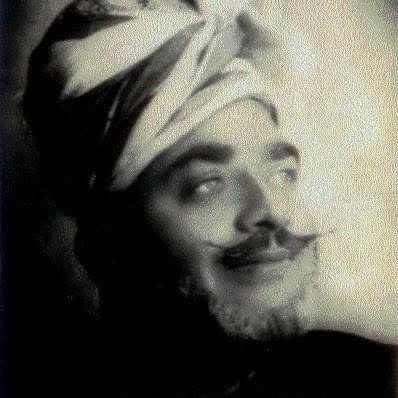
Jalaluddin's formal education was cut short in 1919 when he left school before matriculation to join the Hijrat Movement – a protest emigration to Kabul, Afghanistan. Though his father brought him back from Landi Kotal after the movement was called off, this early brush with activism ignited a restless idealism within him. It was a clear sign of his inclination towards causes greater than himself.
Despite the interruption to his schooling, Jalaluddin carved out a successful path. By the late 1930s, he had established himself as a recognized businessman and social worker in Hazara. He began his career as a driver for the British, gradually rising to become a leading transport contractor. His transport business provided him with crucial mobility, extensive networks, and valuable resources across Hazara – assets he would later dedicate entirely to Pakistan's freedom struggle.
The affectionate nickname "Jalal Baba," meaning an elder, wise man, or expert in the local Hindko language, was not a self-proclaimed title but an organic tribute from the masses. It reflected the deep respect and reverence the people of Hazara held for him. Through his tireless political efforts and genuine concern for the community, he earned his stature as a community elder, a political guide, and a father figure for the entire Hazara Division.
Jalal Baba's formal entry into politics came in 1937 when he joined the All-India Muslim League at a public meeting in Abbottabad's Company Bagh, presided over by Chaudhry Khaliquzzaman. His leadership qualities quickly became apparent. In 1940, he was elected Hazara District President of the Muslim League, an office he would hold for an impressive 21 years.
Under his dynamic leadership, the Hazara Muslim League flourished, acquiring immense strength and popularity. Jalal Baba also served as Vice-President of the Provincial Muslim League and as a respected member of the All-India Muslim League Council. His organizational genius lay in his ability to unify diverse local groups and castes – including the Dhond, Karlal, Tanoli, Pathan, Syed, Awan, Swati, and Tareen – under the Muslim League's banner. This made the Hazara Muslim League a primary regional center for the All-India Muslim League, with workers from across Hazara seeking his directives from what had organically transformed from his transport office into a bustling political command center.
The colonial government, recognizing Jalal Baba's growing influence, conferred upon him the prestigious titles of "Khan Sahib" and later "Khan Bahadur." These were highly coveted distinctions, symbols of status and loyalty to the British Raj.
However, Jalal Baba was a man of principle. In a bold and widely publicized move in 1946, he was among the first to renounce his British-conferred titles. This act was a powerful public declaration of where his allegiance lay – firmly with the nascent nation of Pakistan. At a time when such a stance carried significant political risk, his renunciation solidified his image as a fearless leader committed to the freedom struggle. He was subsequently regarded as the "Winner of the Referendum" for his early, decisive stance.
Jalal Baba was at the forefront of the 'Direct Action' strategy adopted by the Muslim League. In July 1946, he moved a crucial resolution in the All-India Muslim League meeting, recommending the renunciation of all British-conferred titles – an act he had already personally undertaken. When the Muslim League launched its civil disobedience movement in July 1947, Jalal Baba was among the first from Hazara to court arrest. Such was his influence that thousands followed his lead, filling jails to capacity. He remained incarcerated until the declaration of independence on August 14, 1947.
During the critical 1946 elections, Jalal Baba demonstrated his political prowess by decisively defeating his Congress rivals from his urban constituency. His victory effectively routed the All-India Congress from the Hazara region, underscoring the Muslim League's dominance under his leadership. Later, he represented Hazara at the historic Delhi Convention of Muslim League parliamentarians, chaired by Muhammad Ali Jinnah, which ultimately voted for the partition of India and the creation of Pakistan.
Jalal Baba's most significant contribution to the Pakistan Movement came during the 1947 Referendum in the North-West Frontier Province. On June 18, 1947, Quaid-i-Azam Muhammad Ali Jinnah himself appointed Jalal Baba as a member of the Commission overseeing the Muslim League's campaign for the Referendum. From July 6 to July 17, 1947, Jalal Baba worked tirelessly, from dawn to dusk. He not only provided crucial funds but also utilized his extensive transport fleet for campaigning across the entire region.
The results were historic: 90 percent of the votes cast in NWFP were in favor of Pakistan. From Hazara alone, an astounding 99% of Muslim votes supported Pakistan, contributing almost thirty percent of the total votes polled from all of NWFP. Raja Ghazanfar Ali, the Chief Supervisor, sent Jalal Baba a formal letter of appreciation, commending his "keen and energetic co-operation" and acknowledging the services of the National Guards from his district. This was truly "The Lion of Hazara's" greatest hour.
Following independence, Jalal Baba's commitment to the new nation remained undiminished. On August 15, 1947, he authored and personally circulated a pamphlet titled "AELAN-I-JASHAN-I-AZADI-E-PAKISTAN," urging all Muslim League committees and the masses to celebrate Independence Day with fervor, emphasizing the importance of providing food and sweets to the poor.
Jalal Baba remained deeply engaged in the Kashmir cause. His voice, in fact, reached the floor of the United Nations Security Council. In UN Security Council Document S/4024, dated June 11, 1958, India's Permanent Representative, Ambassador Arthur S. Lall, cited Jalal Baba by name. Page 7 of the document records: "Khan Jalaluddin Khan, Minister of State for Interior: Khan Jalaluddin Khan warned the United Nations and Bharat here yesterday that unless a fair solution was found for the Kashmir dispute, 'we might be compelled to shed our blood for the liberation of Kashmir'."
This citation by India in a primary document of international diplomacy underscores Jalal Baba's prominence and the forcefulness of his advocacy on the national and international stage regarding Kashmir.
The pinnacle of Jalal Baba's formal government career came when he served as the 8th Interior Minister of Pakistan, from March 18, 1958, to October 14, 1958, under Prime Minister Feroz Khan Noon. This was one of the most senior federal positions ever held by a leader from the Hazara Division. The UN record confirms he actively used this powerful platform to advocate for Kashmir on the world stage, demonstrating his consistent commitment to national interests.
Even at the height of his power, Jalal Baba never distanced himself from the masses. His loyalty to the poor was genuine and unwavering. He rose from the humble station of a blacksmith's son and a driver to a Cabinet Minister through sheer credibility, organizational brilliance, and the profound love of ordinary people. He embodied the spirit of "Jalal Baba" – the wise, respected elder who always stood with his people.
Khan Jalaluddin Khan "Jalal Baba" passed away on January 23, 1981, in Abbottabad, at the age of 79. He died in the same city where he was born, a man who had traversed the corridors of power but never forgotten his roots.
His legacy lives on. The Jalal Baba Auditorium in Abbottabad, a sprawling 8.75-acre complex built in 1993, stands as a testament to his services to Pakistan. His name is etched into the streets, institutions, and collective memory of the Hazara Division – a region that nurtured him, and that he, in turn, placed firmly on the map of Pakistani nationhood.
June 10, 2026
June 06, 2026
June 05, 2026